

Why Choose Us
15+ years of experience
Years of high attention to good quality products, more than 15 years of practical technique, canonical management.
Innovation
We focus on developing and create more perfect item as per customers' needs, and improve manufacture technique, product variety.
Solution
We help clients solved problems that different surfaces hard to sticked on the object, at the same time suggest suitable material according to different climate, sticked object, using environment.
Professional service
We will help customers get what they need and ensure production safety and stable quality. Please feel free to contact us.
Offset printing is a widely used printing method that involves transferring an inked image from a plate to a rubber blanket, and then to the printing surface. The process offers high-quality prints with sharp and clean images, making it suitable for a variety of printing needs, including books, magazines, brochures, and large format prints. The choice of material used in offset printing significantly impacts the quality of the final product and includes paper, ink, and the printing plates.

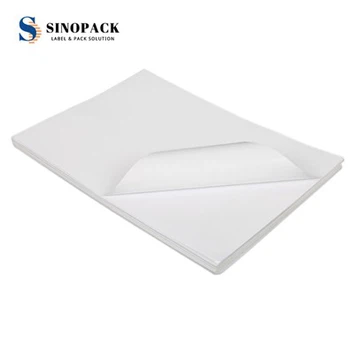


Offset presses are versatile printing machines that can handle a wide range of materials, making them the go-to choice for various print media such as magazines, newspapers, and more. From lightweight paper to heavy cardstock, offset presses offer flexibility in terms of the materials they can accommodate. These machines use a plate to transfer the image onto the web.
One of the most commonly used materials in offset printing is paper. Both coated and uncoated papers are suitable for offset presses. Coated papers have a smooth surface and are ideal for projects that require vibrant colors and sharp images. On the other hand, uncoated papers have a more natural texture and are often chosen for their tactile appeal. When it comes to offset printing, the plate is a crucial component. The plate is responsible for transferring the image onto the paper, ensuring accurate reproduction. In addition to the plate, another important element in offset printing is the web. The web refers to the continuous roll of paper that feeds through the press, allowing for efficient and high-speed production.
In addition to traditional paper substrates, specialty materials like plastic sheets and metal sheets can also be used with offset presses. Plastic sheets provide durability and resistance to moisture, making them suitable for applications like ID cards or outdoor signage. Metal sheets offer a unique aesthetic appeal and are often utilized for luxury packaging or high-end promotional materials. This versatility is one of the advantages of digital printing technology, which allows for the use of various materials to create high-quality prints. Whether it’s a plastic plate or a metal plate, digital printing on these substrates can produce stunning results. With the advancement of web-based printing services, it has become even easier to order custom prints on different materials for various purposes.
The suitability of a material for offset printing depends on its porosity and ability to absorb ink effectively. Porous materials, such as paper, allow ink to be absorbed into the fibers, resulting in crisp prints with minimal smudging or bleeding. This is why paper remains one of the most popular choices for offset presses since it readily absorbs ink while maintaining excellent print quality.
Different weights and finishes further expand the options available for offset printing projects. The weight of a material refers to its thickness or density, which affects its sturdiness and feel. Lighter-weight papers are commonly used for items like flyers or brochures, while heavier cardstock is preferred for business cards or invitations. These options can be utilized with various presses to achieve the desired outcome. Additionally, the type of plate used in the printing process also plays a significant role in the final result. Offset printing is often done on a web press, which allows for high-speed production and efficient printing of large quantities.
Finishes add another layer of versatility to printed materials produced using offset presses. Some common finishes in digital printing include gloss (providing a reflective shine), matte (offering a non-reflective surface), satin (a balance between gloss and matte), and embossed (creating raised patterns). Each finish contributes to the overall look and feel of the printed piece, allowing for customization to suit specific design preferences. The finishes are applied using plates.

Advantages Of Offset Printing Material
Quality Results: Offset printing creates sharp images, precise text, and vibrant colors. Ink transfer from plate to paper ensures consistent and accurate colors.
Cost-Efficiency: It's economical for large print quantities, as setup costs are spread across the run, reducing per-unit expenses.
Paper Variety: Offset printing works well on different paper types, allowing for glossy magazines, textured brochures, and matte-finish books.
Consistent Colors: A standardized color system ensures uniform color reproduction, vital for brand identity and accuracy.
Special Enhancements: Use unique inks and finishes for premium visual and tactile appeal.
Durability: Prints are long-lasting and resistant to fading, ideal for books and archival materials.
Minimal Distortion: Indirect ink transfer minimizes image damage, suitable for delicate or textured materials.
Eco-Friendly Options
Choose eco-friendly inks and recycled paper, with water-based systems reducing environmental impact.
Print Consistency
Maintains consistent quality throughout the print run for a professional outcome.
Fine Detail
Precise reproduction of intricate details, making it suitable for art prints and intricate designs.
Versatility
Works well for magazines, books, brochures, catalogs, packaging, and more.
Different Types Of Offset Printing Material
Web
In web offset printing, printers print on a long, continuous sheet of paper, cut and separated once printed. This type of offset printing is ideal for large-quantity orders, such as books, magazines, or newspapers.
Sheet-fed
Sheet-fed offset printing already has its pages cut before the printer receives them. Printers have a sheet feeding machine that blows an air jet to push a single sheet of paper through the machine. The devices also have detectors that automatically shut the printer off if it recognizes that one sheet is too thick, meaning it is still attached to another.
Quick-set
Quick-set printing machines use quick-set ink that sets quickly and dries slowly, allowing it to save ink. It is an ideal printing type for periodicals, instruction manuals, and trademarks. These also dry faster compared to other offset printing methods, allowing for a much faster turnaround time.
Understanding The Offset Printing Material Process
Offset Printing Material is a widely used printing process that involves transferring ink from plates to a rubber blanket before applying it to the paper. This technique utilizes the color model and is commonly used in both sheet-fed and web presses to create full-color prints with precise color matching capabilities.
The Offset Printing Material process begins with prepress preparation for the web presses. This includes plate creation and setup time to ensure accurate reproduction of the desired image or text on the sheet. The plates, typically made of aluminum, have a photosensitive coating that reacts to light during exposure. Once the plates are prepared, they are mounted onto the fed printing press.
During the Offset Printing Material process, offset inks are applied to the plates using rollers. The offset inks adhere only to the areas exposed by the image or text on the plate. Next, a rubber blanket is pressed against the plates, transferring the offset inks from them onto itself. Finally, this inked blanket comes into contact with the paper as it passes through another set of rollers in order to transfer the image or text onto it.
One of the key advantages of Offset Printing Material is its ability to accommodate various paper sizes and thicknesses. Whether you need small business cards or large posters, offset presses can handle your requirements effectively. Offset printing offers excellent print quality with sharp details and vibrant colors, making it a popular choice for web-based businesses.
Another benefit of Offset Printing Material is its cost-effectiveness for high-volume production runs. Once all preparations are complete, such as plate creation and setup time, subsequent prints from web presses can be produced quickly and efficiently. This makes it an ideal choice for large-scale projects like magazines or brochures where consistency in quality and color accuracy are crucial.
In contrast to digital printing methods that directly apply ink onto paper without any intermediate steps, offset printing provides superior color accuracy due to its use of inks. By separating colors into individual dots called halftones during plate creation, precise blending occurs when these dots combine on the paper. This results in a wider color gamut and more accurate representation of complex images or gradients. Offset presses are known for their ability to produce high-quality prints, making them a popular choice in the web printing industry.
To summarize, Offset Printing Material is a widely used printing process in the web industry that involves transferring ink from plates to a rubber blanket before applying it to the paper. It offers precise color matching capabilities using the color model and requires prepress preparation. With its ability to accommodate various paper sizes and thicknesses, offset printing is an ideal choice for high-volume production runs in the web industry that demand consistent quality and vibrant colors.
What Is Offset Printing Material Used For?
Commercial Printing
Offset printing is the preferred method for printing magazines, newspapers, catalogs, brochures, and other large-scale commercial publications.
Packaging
Offset printing is commonly used for printing labels, wrappers, and boxes for various consumer products, providing high-quality, consistent, and cost-effective printing.
Posters and Signage
Large-format offset printing is often used to produce high-quality posters, banners, and other signage for advertising, events, and promotions.
Books and Manuals
Offset printing is well-suited for printing books, technical manuals, and other bound publications that require high-volume production.
Business Stationery
Offset printing is frequently used to produce business cards, letterheads, envelopes, and other stationery items for corporate clients.
Advertising Materials
Offset printing is commonly used to produce flyers, brochures, and other marketing collateral that requires high-quality, full-color printing.
Our Factory
Sinopack Industry is one global, professional corporate which focused on the development and manufacture of premium quality&sustainable self adhesive materials for the graphics arts printing industry, serving several segments such as Flexography, Lithography, Screen and Digital printing, with a large portfolio of label materials used in the identification of products for various sectors: food, beverages, personal care, logistical , pharmaceutical, clothing ,electronics, Auto,safety, cosmetics, and cleaning.
FAQ
We're professional offset printing material manufacturers and suppliers in China. If you're going to buy high quality offset printing material at low price, welcome to get free sample from our factory. Also, customized service is available.