

Why Choose Us
15+ years of experience
Years of high attention to good quality products, more than 15 years of practical technique, canonical management.
Innovation
We focus on developing and create more perfect item as per customers' needs, and improve manufacture technique, product variety.
Solution
We help clients solved problems that different surfaces hard to sticked on the object, at the same time suggest suitable material according to different climate, sticked object, using environment.
Professional service
We will help customers get what they need and ensure production safety and stable quality. Please feel free to contact us.
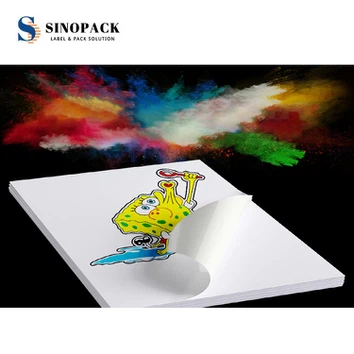
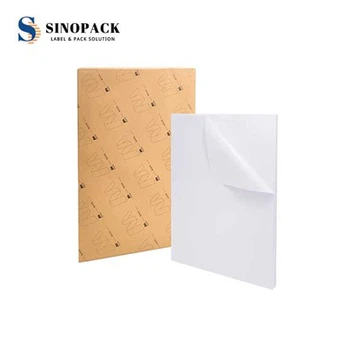
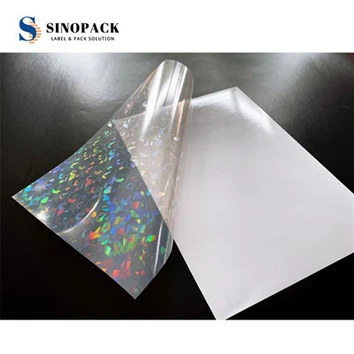
Digital printing media refers to the various types of materials that are used as the substrate or surface for digital printing. Digital printing is a method of printing that uses digital data to create high-quality prints without the need for traditional printing plates.





Benefits of Digital Printing Media
Being a more modern form of printing, there are many benefits for choosing digital over traditional printing. These include:
Frequent advances – Innovations make it more adaptable than older forms. It is much more flexible and easily updated to fit more and more products and ideas.
Cheaper to set up and run – Not requiring the machinery needed with physical printing devices, such as plates, is much cheaper to print digitally. Maintenance costs only go as far as the devices themselves, and the inks are easier to come by.
Order volume can range from a single item – Since it is cheaper and quicker to print digitally, a single item is much more cost-friendly. This makes digital printing a much more viable option for Print on Demand services.
Quicker printing process – As there are very few steps involved in setting up a digital printing project, the time it takes to produce the chosen items is significantly reduced. Despite the faster printing time, it also maintains the same level of quality, meaning more high-quality products can be printed in a shorter time.
Digital images are easier to edit – Personalized items are much simpler to produce as a digital image can be edited freely and quickly. Some images can even be programmed to update automatically based on a set of data input into the image or software.
Black and white printing is much cheaper – While digital printing has the market covered for vibrant and high-quality color printing, black and white options are much cheaper than even color options.
Digital printing has revolutionized the way artists produce printed materials by using electronic files instead of traditional plates or screens. This technology offers several advantages for coated paper products and documents, making it a popular choice for many businesses and individuals alike.
One of the most common devices used for digital printing is inkjet printers. These printers work by spraying tiny droplets of ink onto the paper to create an image. They are versatile and can print on various types of media, including paper, fabric, ceramics, and business cards. Another popular option is laser printers, which use a laser beam to transfer toner onto the paper. Laser printers are known for their high speed and precision, making them ideal for printing documents and product labels. Additionally, both inkjet and laser printers can produce high-quality images on screen as well.
The quality of digitally printed fine art depends on the resolution of the image. Resolution is measured in dots per inch (dpi) and determines the level of detail and sharpness in the prints. For documents or designs with intricate patterns, it is important to choose a printer with higher dpi for optimal results.
One significant advantage of digital printing is variable data printing (VDP) for fabric, fine art, and screen documents. With VDP, each printed piece can be customized with unique information or graphics without slowing down the overall production process. This level of customization allows businesses to personalize their marketing materials by tailoring messages to individual recipients or target audiences.
For instance, companies can include personalized names or addresses in direct mail campaigns to make them more engaging and relevant.
Different Types and Processes of Digital Printing Media
Direct-to-Garment (DTG) Printing
Direct-to-garment (DTG) printing is a popular digital printing process used for textile printing on t-shirts and other apparel. This method involves using specialized inkjet printers that directly apply the ink onto the fabric, creating vibrant and detailed designs. DTG printing allows for intricate artwork, gradients, and even photographs to be printed with precision.
Large Format Printing
Posters, or signage materials, digital printing has revolutionized the fabric industry with its large format printers. These fabric machines are capable of producing high-quality prints on various materials such as vinyl, canvas, or paper. Large format printers utilize advanced print heads that can handle wide swaths of fabric while maintaining sharpness and color accuracy.

Dye-Sublimation Printing
Another type of digital printing process is dye-sublimation. This method transfers ink onto a special transfer paper before heat pressing it onto fabric or other surfaces. The heat causes the ink to turn into a gas, which then permeates the fibers of the material, resulting in vivid and long-lasting prints. Dye-sublimation printing is commonly used for producing custom clothing, sports jerseys, promotional items, and personalized gifts.
3D Printing
While not traditionally associated with “printing” in the conventional sense, 3D printing is an innovative digital manufacturing process that deserves mention here. Using additive manufacturing techniques, 3D printers create physical objects layer by layer from digital models or CAD files. This technology has opened up new possibilities in fields like prototyping, product design, architecture, healthcare, and fabric.
Working Principle Of Digital Printing Media
Designing Your Campaign Material
Depending on what your company works with, you can either design your pressing material yourself or hire somebody else to do it. If you have a publishing department, they will know how to prepare the design to be print ready.
Submission and Preparation of Your Design
Once your final design is done, it’s time to submit it to the publishing company of your choice. You will need to discuss the outcome of the design if you want a more specific image to come out. Many publishing companies are open to meetings and discussions before concluding how the design will be pressed.
Dealing With Waste Ink, Cleaners and Temperature
Some people might think that leftover ink is good because you won’t have to use new ones. In publishing companies, this is not the case. These are called waste ink and they should be replaced with new ink for better press output.
Printing Out the Image
Once the machine is ready, your image is ready for digital pressing. There are pallets designed to hold down the paper or material on which your design will be pressed. Publishing companies will use different sizes depending on which one will fit with the design size you choose.
Reviewing the Print
Once the job is complete, the pallet is carefully emptied of the published material. This is done slowly and carefully so as not to damage both the machine and the machine itself. Mostly, the ink is still wet and shouldn’t be touched immediately.
What Are The Features Of Digital Printing Media?
Faster response time. There’s minimal setup and color is taken care of easily with a built-in color registration system that offers advanced color-match capabilities.
Personalized print jobs are possible. Each piece can be tailored to the audience it aims to reach. That just wasn’t practical with the old analog printing processes. With analog, each customization had to be a different printing job.
More choices in materials. Digital printing is a so-called “non-contact” sport. That is, the paper, fabric, or even ceramics being printed don’t actually come into contact with as much of the printing mechanism. Therefore, materials don’t have to be held in place quite so rigorously. Delicate fabrics and extremely thin paper can withstand the process of digital printing, whereas with old analog methods they would not have held up under the harsher handling.
More choices when it comes to ink color. One of the digital printing advantages most people forget about is the ability to print using white ink, or any color you can imagine. Now your creativity can really blossom!
A world of options when it comes to materials. Since digital is a non-contact form of printing (it doesn’t use plates), designers can get even more creative with a whole new range of options in materials available to them.
Faster proof cycle. With digital, proofs are quickly developed and easily shared. That shortens the entire proof cycle for faster turnaround time.
Short print runs are possible. In the old days, with analog printing, short print runs were prohibitively expensive. Any job required tons of setup, even if the job was small. But with digital printing, small and medium print runs are cost-effective.
What Are The Process Characteristics Of Digital Printing Media?
In the traditional printing process, waste color paste is produced more or less for each set of colors printed. These waste color pastes are difficult to reuse, which not only wastes dyes and auxiliaries, but also increases the cost of sewage treatment. Digital printing does not need to prepare color paste, which not only saves the space, facilities, dyes and auxiliaries required to prepare color paste, but also uses the same ink no matter what pattern is printed, except that a small amount of waste ink is generated when cleaning the nozzle. , no other waste is generated, and the waste of dyes and auxiliaries is very small.
Digital printing does not need to make a pattern (net), saves the purchase of related equipment and materials, and the site for making a pattern (net), saving costs. The cost of at least several thousand yuan is at least a few thousand yuan to make a pair of flower plates (nets) by traditional printing. It takes up a lot of space for the storage of the prepared designs (nets). Moreover, if the mass production is not carried out after proofing, it will cause waste of pattern (net) making. In addition, color separation and sketching should be carried out before making the pattern (net), and the color separation and sketching of the complex pattern takes a long time. Digital printing does not require sketching or making a pattern (net), which saves time and cost. Create conditions for fast delivery.
In traditional printing, whether it is a flat screen or a rotary screen, due to the limitation of the screen width and the diameter of the rotary screen, there are restrictions on the size of the printed pattern. Digital printing breaks through the color registration limitations of traditional printing, and can flexibly create color combinations, quickly change colors, and easily complete color gradients, moiré and realistic color performance. The digital printing pattern is not affected by the number of colors and the registration error of the screen, and the pattern is vivid in color and rich in layers.
Traditional printing requires a series of complex processes such as pattern making (screen), color paste, and on-machine printing, so it often requires a minimum printing volume. In the case of uncertain market sales, it is difficult for manufacturers to develop new patterns in large quantities. One of the biggest advantages of digital printing is that it can meet the production requirements of any small batch of customers, and then meet the sales needs of customers to develop new patterns and zero inventory backlog. In addition, the delivery period of traditional printing is very long. If you encounter products with complex patterns and color-sensitive products, the delivery period can reach 1 to 2 months. However, the delivery time of small batches of digital printing is mostly only 2 to 3 days or less, and the urgent proofing can be completed on the same day.
Our Factory
Sinopack Industry is one global, professional corporate which focused on the development and manufacture of premium quality&sustainable self adhesive materials for the graphics arts printing industry, serving several segments such as Flexography, Lithography, Screen and Digital printing, with a large portfolio of label materials used in the identification of products for various sectors: food, beverages, personal care, logistical , pharmaceutical, clothing ,electronics, Auto,safety, cosmetics, and cleaning.
FAQ
We're professional digital printing media manufacturers and suppliers in China. If you're going to buy high quality digital printing media at low price, welcome to get free sample from our factory. Also, customized service is available.